


- Home
- Basic CompTIA Certifications for you
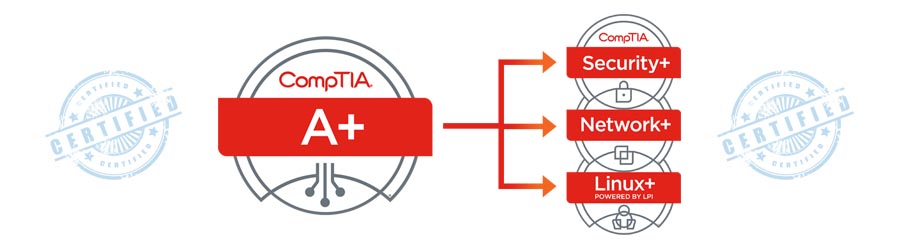
Basic CompTIA Certifications for you
CompTIA, which stands for Computing Technology Industry Association, is one of the most respected and widely recognized vendors in the IT certification industry. Founded in 1982, the organization has spent decades developing standardized credentials that validate the technical knowledge and practical skills of IT professionals across a broad range of disciplines. Unlike vendor-specific certifications tied to a single company’s products, CompTIA certifications are vendor-neutral, meaning they test foundational knowledge that applies across different platforms, operating systems, and technologies.
This vendor-neutral approach is one of the primary reasons CompTIA certifications carry such weight with employers across the globe. A hiring manager reviewing a resume knows that a CompTIA-certified candidate has demonstrated competency in core technical areas regardless of which specific tools or platforms that candidate has worked with. For individuals beginning their IT careers or looking to formalize existing knowledge, CompTIA certifications provide a credible, universally respected proof of ability that opens doors across industries including healthcare, finance, government, education, and technology services.
IT Fundamentals Certificate Overview
CompTIA IT Fundamentals, commonly referred to as ITF+, is the entry point into the entire CompTIA certification pathway. It is designed for individuals who have little to no prior experience with information technology and want to determine whether a career in IT is the right direction for them. The exam covers basic computing concepts including hardware components, software types, networking basics, security awareness, and database fundamentals at a very introductory level.
ITF+ is not a requirement for pursuing other CompTIA certifications, but it serves as a useful foundation for candidates who feel they need to build confidence and foundational vocabulary before tackling more rigorous exams. It is particularly popular among career changers, students in secondary education, and professionals from non-technical fields who interact with IT systems regularly and want a structured way to deepen their general technical literacy. Passing ITF+ signals to employers that a candidate has taken a deliberate step toward formal IT knowledge, which can be a meaningful differentiator in entry-level job applications.
CompTIA A Plus Explained
CompTIA A+ is arguably the most recognized entry-level IT certification in the world and is widely considered the standard starting credential for anyone pursuing a career as a hardware technician, help desk specialist, or IT support professional. The certification consists of two separate exams — Core 1 and Core 2 — each of which must be passed to earn the full credential. Core 1 covers mobile devices, networking basics, hardware, virtualization, and cloud computing, while Core 2 focuses on operating systems, security, software troubleshooting, and operational procedures.
Earning CompTIA A+ demonstrates that a candidate is capable of performing the day-to-day tasks that form the backbone of IT support operations. Technicians with A+ certification are prepared to install, configure, and troubleshoot hardware and software issues across a wide variety of devices and environments. Many employers in both the private sector and government agencies list A+ as a preferred or required qualification for entry-level IT positions. The Department of Defense also recognizes A+ under its 8570 directive, making it a relevant credential for those pursuing careers in military IT or federal contracting roles.
Network Plus Certification Benefits
CompTIA Network+ is the natural next step for IT professionals who have established foundational hardware and software skills and want to develop a deeper specialization in networking technologies. The exam covers a comprehensive range of networking topics including network topologies, protocols, addressing schemes, switching, routing, wireless technologies, network security, and troubleshooting methodology. It is designed to validate the skills needed to design, configure, manage, and troubleshoot wired and wireless networks in enterprise environments.
Network+ is particularly valuable for individuals who want to move into roles such as network administrator, network technician, or systems administrator. The knowledge tested by Network+ forms the basis for more advanced networking certifications and also overlaps significantly with concepts covered in cybersecurity certifications. Many professionals choose to pursue Network+ before or alongside Security+ because a solid grasp of networking fundamentals is essential for effective cybersecurity work. Employers across industries consistently list Network+ as a desirable qualification, and it is recognized by the Department of Defense as meeting baseline requirements for certain information assurance roles.
Security Plus Career Opportunities
CompTIA Security+ is one of the most sought-after cybersecurity certifications in the industry and is widely regarded as the benchmark entry-level credential for IT security professionals. The exam covers threat detection and analysis, technologies and tools used in security operations, architecture and design principles, identity and access management, risk management, and cryptography. It is updated regularly to reflect the evolving threat landscape, ensuring that certified professionals are familiar with current attack vectors and defense strategies.
Security+ is recognized by employers across virtually every sector that takes cybersecurity seriously, which in the current environment means nearly every major organization. Government agencies, defense contractors, financial institutions, healthcare providers, and technology companies all value Security+ as evidence of baseline security competency. The Department of Defense mandates Security+ for personnel in certain information assurance roles under its 8570 and 8140 directives, making it an especially critical credential for those working in or with federal agencies. For IT professionals who want to transition into the cybersecurity field, Security+ represents one of the most efficient and respected pathways into that discipline.
Cloud Plus Growing Demand
CompTIA Cloud+ validates the skills required to deploy, secure, and automate cloud environments across all major cloud service providers. The exam covers cloud architecture, security, deployment, operations, troubleshooting, and the management of cloud infrastructure. As businesses of all sizes continue shifting their operations and data to cloud platforms such as AWS, Microsoft Azure, and Google Cloud, the demand for professionals with validated cloud competency has grown dramatically and shows no signs of slowing.
Cloud+ occupies an interesting position in the CompTIA pathway because it sits at an intermediate level, typically pursued after A+ and Network+ but before vendor-specific cloud certifications from Amazon or Microsoft. It provides a strong vendor-neutral foundation that helps professionals apply cloud concepts across multiple platforms rather than being locked into a single provider’s ecosystem. For IT professionals whose organizations are in the midst of cloud migration or who want to position themselves for the growing number of cloud-focused roles available in the job market, Cloud+ is a highly practical and relevant certification to pursue.
Linux Plus Technical Skills
CompTIA Linux+ is designed for IT professionals who work with Linux-based systems and want a vendor-neutral credential that validates their command-line skills, system configuration abilities, and Linux security knowledge. The exam covers topics including hardware and system configuration, systems operation and maintenance, security, Linux troubleshooting, and automation through scripting. Linux is the operating system that powers the majority of the world’s web servers, cloud infrastructure, and embedded systems, making Linux proficiency an extremely marketable skill.
Linux+ is particularly relevant for system administrators, DevOps engineers, cloud engineers, and cybersecurity professionals who regularly work in Linux environments. The exam requires a more hands-on, practical skill set than some other CompTIA certifications, reflecting the reality that Linux administration involves significant command-line interaction and scripting work. Candidates who prepare for Linux+ develop skills that translate directly into daily job tasks rather than abstract conceptual knowledge, which makes the certification particularly satisfying for technically oriented individuals who prefer learning by doing.
Data Plus Emerging Relevance
CompTIA Data+ is a relatively newer addition to the CompTIA certification portfolio and reflects the explosive growth of data-related roles across all industries. The exam covers data concepts and environments, data mining, data analysis, visualization, and data governance. It is aimed at professionals who work with data in business intelligence, analytics, or reporting roles and want a structured credential that validates their ability to work with data responsibly and effectively.
As organizations increasingly rely on data-driven decision making, the ability to collect, interpret, and communicate data insights has become a core professional skill that extends well beyond traditional IT roles. Data+ is relevant not only for aspiring data analysts but also for IT professionals who support data infrastructure and for business professionals who want to formalize their analytical skills. The certification fills an important gap between purely technical IT credentials and the business-facing world of analytics, making it a versatile addition to the resume of anyone working at the intersection of technology and organizational decision making.
Server Plus Administration Skills
CompTIA Server+ validates the knowledge and skills required to work with server hardware and software technologies in data center and cloud environments. The exam covers server hardware installation and management, server administration, security, storage, and troubleshooting. It is designed for IT professionals who specialize in server support and administration roles, typically those with at least two years of hands-on experience in server environments.
Server+ is particularly valuable for system administrators and data center technicians who want a vendor-neutral credential that demonstrates their ability to manage physical and virtual server infrastructure. The certification covers both on-premise and cloud-based server environments, reflecting the hybrid reality of most modern IT infrastructures. For professionals who feel that their server administration skills are solid but lack formal certification to back them up, Server+ provides a respected way to validate existing expertise and signal readiness for senior roles or expanded responsibilities within their organization.
CySA Plus Intermediate Security
CompTIA Cybersecurity Analyst, known as CySA+, is an intermediate-level cybersecurity certification that bridges the gap between the foundational knowledge validated by Security+ and the advanced skills required for senior security roles. The exam focuses on threat detection, behavioral analytics, vulnerability management, and incident response. It emphasizes the analytical and investigative side of cybersecurity work, validating the ability to proactively identify and respond to threats rather than simply implementing defensive configurations.
CySA+ is well suited for professionals working in security operations center roles, threat intelligence, vulnerability assessment, or incident response. The behavioral analytics focus of the exam reflects the shift in the cybersecurity industry toward more proactive, data-driven approaches to threat hunting and detection. For Security+ holders who want to continue building their cybersecurity career trajectory, CySA+ represents a logical and well-respected next step that significantly expands the depth and complexity of security knowledge being validated. Employers seeking candidates for mid-level security analyst positions frequently list CySA+ as a preferred qualification.
PenTest Plus Ethical Hacking
CompTIA PenTest+ is designed for cybersecurity professionals who specialize in penetration testing and vulnerability assessment. The exam covers penetration testing planning and scoping, information gathering and reconnaissance, attacks and exploits, penetration testing tools, and reporting and communication of findings. Unlike certifications that focus on defense, PenTest+ validates the offensive security skills needed to identify weaknesses in systems before malicious actors can exploit them.
Penetration testers, ethical hackers, and vulnerability researchers are in high demand as organizations recognize that proactive security testing is an essential component of a robust security posture. PenTest+ is positioned alongside Certified Ethical Hacker and Offensive Security Certified Professional as a recognized credential in this specialization, though its vendor-neutral approach and DoD recognition give it a distinctive appeal particularly in government and federal contracting environments. Candidates pursuing PenTest+ should have a solid background in networking, security fundamentals, and some hands-on experience with common testing tools and methodologies before attempting the exam.
CASP Plus Advanced Credential
CompTIA Advanced Security Practitioner, known as CASP+, is the highest-level cybersecurity certification in the CompTIA portfolio and is aimed at experienced security professionals who want to demonstrate advanced practitioner-level skills without moving into a management track. Unlike many senior certifications that test strategic management and governance knowledge, CASP+ maintains a strong technical focus, validating the ability to architect, engineer, and implement complex security solutions in enterprise environments.
CASP+ is appropriate for professionals with at least ten years of IT experience, including a minimum of five years of hands-on security experience. The exam covers enterprise security architecture, risk management, research and collaboration, and integration of enterprise security. It is one of the few advanced IT certifications that keeps its focus squarely on technical implementation rather than shifting toward policy and management as seniority increases. For technical professionals who want to remain individual contributors and subject matter experts rather than moving into leadership roles, CASP+ provides a prestigious and challenging credential that reflects genuine mastery of advanced security concepts.
Project Plus Management Skills
CompTIA Project+ is designed for IT professionals who manage projects or participate in project teams and want a credential that validates their project management knowledge without committing to the extensive prerequisites of certifications like the Project Management Professional. The exam covers project basics, constraints and project communication, project change and control, and project tools and documentation. It takes a practical, IT-centric approach to project management concepts.
Project+ is particularly useful for IT professionals who find themselves taking on project coordination responsibilities as their careers progress but do not have formal project management training. In many organizations, senior technicians and team leads are expected to manage deployments, migrations, and implementation projects alongside their technical duties. Having a recognized project management credential makes these professionals more effective in those hybrid roles and signals to employers that they can handle both the technical and organizational dimensions of complex IT initiatives.
Stackable Certifications Pathway Strategy
One of the most thoughtful aspects of the CompTIA certification framework is its stackable credentials system. CompTIA has designed its certifications to build upon each other in a logical progression, and certain combinations of credentials unlock additional stackable certifications that recognize a candidate’s breadth of knowledge. For example, earning both Security+ and CySA+ contributes toward the CompTIA Secure Infrastructure Specialist stackable certification, while combining A+, Network+, and Security+ earns the CompTIA Secure Infrastructure Specialist designation.
This stackable system incentivizes candidates to pursue multiple certifications and rewards them with additional recognition for doing so. It also provides a structured framework for career planning, helping professionals identify which combination of certifications best supports their desired career trajectory. Rather than collecting credentials randomly, the stackable pathway system encourages deliberate, strategic investment in certification study that builds coherent expertise in a specific domain. For IT professionals who are serious about career development, taking the time to understand the stackable certification map and planning accordingly can maximize the return on every exam fee and study hour invested.
Exam Preparation Effective Methods
Preparing effectively for CompTIA exams requires a combination of study resources, hands-on practice, and disciplined time management. Official CompTIA study guides provide comprehensive coverage of all exam objectives and are a reliable starting point for any preparation effort. These are supplemented effectively by video courses from platforms such as Professor Messer, which offers free CompTIA-focused video content, and paid platforms such as Udemy and Pluralsight that provide structured courses with practice questions.
Hands-on practice is especially important for certifications that test practical skills such as Linux+, Network+, and the security-focused exams. Setting up a home lab using virtual machines allows candidates to apply theoretical knowledge in a real environment, which deepens retention and builds the confidence needed to handle scenario-based exam questions. Practice exams from providers such as Jason Dion and Mike Meyers closely simulate the actual exam experience and help identify knowledge gaps before test day. Taking multiple full-length practice exams under timed conditions in the weeks before the real test is one of the single most effective ways to improve both score and confidence.
Job Roles After Certification
Earning CompTIA certifications opens doors to a wide range of IT job roles at various levels of seniority and specialization. Entry-level certifications like A+ and Network+ typically qualify candidates for roles such as help desk technician, desktop support specialist, field service technician, and junior network technician. These positions provide the hands-on experience necessary to develop the deeper skills required for advancement into more specialized and better-compensated roles.
Mid-level certifications such as Security+, CySA+, Cloud+, and Linux+ position professionals for roles including security analyst, cloud engineer, systems administrator, and network engineer. Advanced certifications like CASP+ and PenTest+ support career advancement into senior security architect, penetration tester, and security consultant positions. The salary ranges associated with these roles reflect the value employers place on certified professionals, with entry-level positions typically starting between forty and sixty thousand dollars annually and senior roles commanding well over one hundred thousand dollars in most markets. CompTIA certifications provide a recognized and respected framework for progressing through these compensation tiers in a structured and verifiable way.
Certification Renewal and Maintenance
CompTIA certifications are not lifetime credentials — they require periodic renewal to remain valid and current. Most CompTIA certifications are valid for three years from the date of earning them. Renewal can be accomplished through several methods including passing a higher-level exam in the same domain, earning a certain number of Continuing Education Units through activities such as attending industry conferences, completing training courses, publishing technical content, or participating in professional development programs.
The CompTIA Continuing Education program, known as CE, provides a structured framework for tracking and submitting renewal activities. Certified professionals must accumulate a specified number of CE units within the three-year validity period and pay a renewal fee to maintain their credential. This renewal requirement ensures that CompTIA-certified professionals stay current with evolving technologies and industry practices rather than relying on knowledge that may become outdated. For employers, the renewal requirement provides assurance that a candidate’s certification reflects current competency rather than knowledge that was valid years ago but has since become obsolete.
Conclusion
CompTIA certifications represent one of the most reliable and respected frameworks available for building a meaningful career in information technology. From the introductory ITF+ credential for complete beginners to the advanced CASP+ for experienced security practitioners, the CompTIA pathway provides a logical, structured, and widely recognized progression that helps IT professionals at every stage of their careers demonstrate their knowledge and advance their professional standing.
The value of CompTIA certifications goes beyond the credentials themselves. The process of preparing for each exam builds genuine technical knowledge and practical skills that translate directly into workplace performance. Every hour spent studying networking concepts for Network+, practicing Linux command-line skills for Linux+, or working through security scenarios for Security+ is an investment not just in passing an exam but in becoming a more capable and effective IT professional. The certifications simply make that capability visible and verifiable to employers.
For anyone standing at the beginning of an IT career path, the most important action is to start. Begin with A+ if your goal is hardware and support work, or with Network+ if networking draws your interest. Add Security+ as soon as possible given the enormous demand for cybersecurity skills across every industry. Build from there based on the specific roles and specializations that align with your interests and career goals. The beauty of the CompTIA framework is that it accommodates many different paths and goals without forcing everyone into the same rigid sequence.
The IT industry continues to grow at a rate that outpaces the supply of qualified professionals, meaning that individuals who invest in building verified technical skills are entering a job market that genuinely needs what they have to offer. Certifications like those offered by CompTIA signal to employers that a candidate has gone beyond casual self-study and committed to a rigorous, standardized evaluation of their knowledge. In a field where credentials and demonstrated competency matter enormously, that signal carries real weight. The journey through the CompTIA certification pathway is demanding, but for those who commit to it fully, the professional rewards are substantial, lasting, and deeply worth the effort required to achieve them.
Popular posts
Recent Posts
- In-Depth Analysis of Solution Architect Salaries in the UK
- AWS Redshift Explained: Key Benefits, Pricing Details, and Setup Steps
- Kickstart Your Cloud Architect Career: A Step-by-Step Guide
- Steps to Becoming a Certified Azure Architect
- Best AWS Solutions Architect Books: Your Complete Guide to Certification & Cloud Mastery
