


- Home
- CompTIA
CompTIA
How to Renew Your CompTIA A+ Certification
The CompTIA A+ certification represents a foundational credential for information technology professionals worldwide, validating essential skills in hardware, software, networking, and troubleshooting. However, many certified professionals discover that their achievement comes with an important requirement: renewal every three years to maintain active status. The CompTIA Continuing Education (CE) program ensures that certified individuals stay current with evolving technology trends and industry standards. Without proper renewal, your certification expires and loses its value in the job market, potentially requiring you to retake the full examination to regain certified status. Renewing your…
CompTIA Cybersecurity Analyst, commonly known as CySA Plus, represents an intermediate level certification designed for professionals who want to deepen their skills in threat detection and security analysis. Unlike entry level credentials that cover broad foundational concepts, this certification focuses specifically on behavioral analytics, threat hunting, and proactive security monitoring. It bridges the gap between foundational security knowledge and more advanced, specialized security roles within an organization. This certification has gained significant recognition among employers seeking professionals capable of identifying and responding to sophisticated security threats. Rather than simply testing…
Become an ICT Technician with IT Apprenticeships
ICT Technicians are responsible for the setup, maintenance, and troubleshooting of various technological systems and infrastructure that organizations use every day. This role is crucial as it directly impacts the efficiency and effectiveness of a company’s operations. Without a reliable ICT Technician, businesses could face system downtime, security breaches, or the inability to provide services to customers, which could lead to significant losses. One of the key responsibilities of an ICT Technician is ensuring that computer networks, servers, and communication systems function optimally. This involves installing and configuring both hardware…
Comparing IT Certifications: CompTIA Security+ vs CISSP
The cybersecurity certification landscape is filled with credentials that promise to validate professional knowledge and advance careers, but few carry the consistent recognition and respect that CompTIA Security+ and the Certified Information Systems Security Professional certification have earned over decades of industry presence. These two credentials occupy different positions on the professional development spectrum, yet both are routinely cited by hiring managers, government agencies, and security teams as meaningful indicators of competency. For anyone building or advancing a cybersecurity career, these are the two certifications most likely to appear on…
Protected Ports: What You Need to Know for the Network+ Exam
The CompTIA Network+ certification is a fundamental credential for IT professionals, confirming the critical knowledge and skills required to design, configure, manage, and troubleshoot both wired and wireless networks. One of the critical areas covered in the Network+ exam is network security, particularly the concept of protected ports. Understanding how to manage and secure these ports is vital for maintaining a secure and efficient network. This blog post will explore the intricacies of protected ports, their importance, and the best practices for securing them, providing you with the knowledge needed…
CompTIA Advanced Security Practitioner (CASP+) CAS-004: Detailed Study Plan
The CompTIA Advanced Security Practitioner certification, currently in its CAS-004 version, is one of the most comprehensive and technically demanding vendor-neutral security certifications available to working cybersecurity professionals. Unlike many security certifications that focus on either management-level strategic thinking or entry-level technical foundations, the CASP+ occupies a distinctive middle ground that validates advanced technical competency in hands-on security implementation while simultaneously requiring the ability to think strategically about enterprise security architecture and governance. This dual focus on technical depth and enterprise-level thinking makes the CASP+ particularly valuable for senior security…
CompTIA Pentest+ Certification Exam: Hands-On Assessment Strategies
The CompTIA Pentest+ certification occupies a distinctive position in the cybersecurity credential landscape because it explicitly prioritizes practical skill demonstration over theoretical knowledge recall. Unlike many certification exams that rely heavily on multiple choice questions testing memorized definitions, the Pentest+ examination integrates performance-based questions that require candidates to perform actual penetration testing tasks within simulated environments. This design philosophy reflects the reality of professional penetration testing work, where success depends not on knowing what a tool is called but on knowing how to use it effectively under realistic conditions. Candidates…
Reasons to Take CompTIA Network+ Before Security+
Choosing the right sequence for IT certifications is a decision that can significantly influence how smoothly a professional progresses through their learning journey. Many candidates entering the cybersecurity and networking fields make the mistake of jumping directly into advanced or specialized certifications without first establishing the foundational knowledge those credentials assume. The result is often a frustrating experience where exam content feels disconnected from what the candidate actually understands, leading to failed attempts and wasted time and money. CompTIA has designed its certification pathway with a logical progression in mind,…
5 SaaS Jobs the New CompTIA A+ Can Prepare You For
The CompTIA A+ certification has undergone significant transformation in its latest iteration, shifting its focus from traditional hardware repair and desktop support toward the cloud-connected, software-as-a-service-driven reality of modern IT environments. This evolution reflects a fundamental change in how technology is consumed and supported across organizations of every size. Where earlier versions of the exam emphasized physical components, local network troubleshooting, and on-premises software installation, the updated credential places meaningful weight on cloud concepts, remote support methodologies, virtualization, and the kinds of cross-platform troubleshooting skills that SaaS environments demand from…
CompTIA Expands 2024 IT Certification, Training Portfolio
CompTIA’s decision to expand its certification and training portfolio in 2024 represents one of the most consequential strategic moves the organization has made in recent memory, signaling a clear intention to broaden its influence across an even wider range of technology disciplines and professional development pathways. As the largest vendor-neutral IT certification body in the world, CompTIA has always occupied a unique and powerful position in the global technology education market, and this expansion builds deliberately on that foundation to address emerging skills gaps, evolving employer requirements, and the rapidly…

Top 5 Linux Certifications: Choose Your Best One!
Linux powers the overwhelming majority of the world’s server infrastructure, cloud computing platforms, container orchestration systems, and embedded devices. As organizations accelerate cloud adoption, containerization initiatives, and DevOps transformation programs, the demand for professionals with verified Linux expertise has grown faster than the supply of credentialed practitioners can satisfy. Choosing the right certification from among the available options is not a trivial decision — it determines which job markets open, which salary bands become accessible, and which technical communities a professional joins. The certification landscape for Linux professionals spans vendor-neutral…
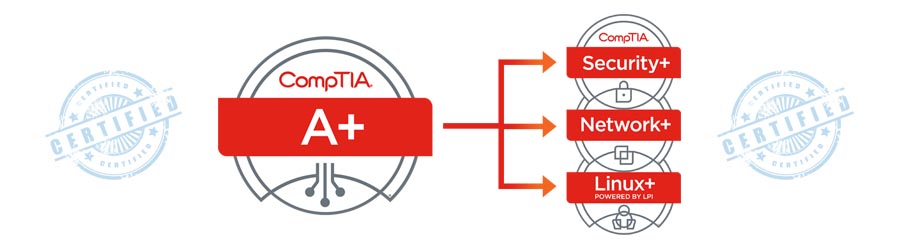
Basic CompTIA Certifications for you
CompTIA, which stands for Computing Technology Industry Association, is one of the most respected and widely recognized vendors in the IT certification industry. Founded in 1982, the organization has spent decades developing standardized credentials that validate the technical knowledge and practical skills of IT professionals across a broad range of disciplines. Unlike vendor-specific certifications tied to a single company’s products, CompTIA certifications are vendor-neutral, meaning they test foundational knowledge that applies across different platforms, operating systems, and technologies. This vendor-neutral approach is one of the primary reasons CompTIA certifications carry…
