


Use VCE Exam Simulator to open VCE files
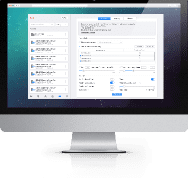
100% Latest & Updated Symantec 250-587 Practice Test Questions, Exam Dumps & Verified Answers!
30 Days Free Updates, Instant Download!
250-587 Premium File
Symantec 250-587 Practice Test Questions, Symantec 250-587 Exam Dumps
With Examsnap's complete exam preparation package covering the Symantec 250-587 Practice Test Questions and answers, study guide, and video training course are included in the premium bundle. Symantec 250-587 Exam Dumps and Practice Test Questions come in the VCE format to provide you with an exam testing environment and boosts your confidence Read More.
Exam 250-587 is a current Broadcom Technical Specialist exam for Symantec Data Loss Prevention 16.x Administration. Broadcom’s current exam page lists 70 questions, a 90-minute duration, a 70% passing score, and a $250 price. The role focus extends across planning, design, deployment, administration, and optimization of an enterprise DLP environment.
Data loss prevention is difficult because the platform must interpret information in business context. A credit-card pattern, source-code fragment, customer record, or confidential document may be legitimate in one workflow and a serious incident in another. Administrators therefore need to understand detection methods, policy design, data discovery, endpoint controls, incident handling, system health, and the governance behind sensitive-data decisions.
Symantec certifications provide the broader vendor context, but 250-587 is specifically about DLP operations. The best preparation starts with the DLP lifecycle: identify sensitive information, classify what matters, create precise detection logic, deploy controls to relevant channels, review incidents, tune the policy, and maintain evidence that the control is working.
A DLP engine can match patterns, fingerprints, exact records, document features, and contextual conditions, but the organization first needs a clear definition of what is sensitive. Policy becomes inconsistent when every team invents its own labels or when technical rules are disconnected from the business consequences of disclosure.
Information classification gives administrators a language for sensitivity, ownership, handling, and impact. A useful DLP program can explain why a dataset is protected, which users are allowed to handle it, which channels are restricted, and what response is expected when policy is triggered.
Simple keywords and regular expressions are fast to create but can produce large false-positive volumes. More precise methods such as exact data matching, indexed document matching, described content, or other structured techniques can reduce noise when the protected information has stable characteristics. The administrator should understand the trade-off between setup effort, coverage, performance, and precision.
Data loss prevention fundamentals are useful here: a detection should reflect the actual loss scenario. The same sensitive term can appear in training material, public documentation, and confidential records, so context such as destination, user group, file type, quantity, and channel often matters as much as the content match itself.
DLP controls can address data moving through endpoints, email, web traffic, storage locations, and discovery processes. Each channel sees different evidence and has different enforcement options. Blocking a removable-media copy is not operationally equivalent to flagging a stored document on a file share.
Administrators should map policies to likely loss paths. If the organization is concerned about employees uploading designs to unsanctioned services, endpoint and web controls may matter more than a broad file-system scan. If the concern is accumulated legacy data, discovery and remediation workflows become central.
A policy is not successful merely because it generates incidents. Reviewers need enough context to decide whether an event is a true violation, a benign business process, a policy-design problem, or a technical anomaly. Severity, data type, user, destination, channel, business unit, and recurrence can all affect priority.
The incident response lifecycle helps distinguish detection from resolution. A DLP reviewer may need to contain further exposure, contact the data owner, preserve evidence, correct a workflow, update training, or tune a rule. Closing the incident without fixing the underlying condition creates repeat work.
Business context often sits outside the security team. A data owner may know whether a recipient was authorized, whether a transfer was part of a contract, or whether a repository should contain a certain document. DLP workflows can use that knowledge, but only if ownership records are accurate and escalation routes are maintained.
Exception handling should not become a way to bypass policy. If the same exception appears repeatedly, the administrator should ask whether the rule, business process, or access model needs redesign. A mature program learns from incident patterns instead of accepting permanent noise.
DLP is one layer of data protection. Access control, encryption, retention, masking, endpoint protection, identity governance, and application design influence whether sensitive information is exposed. If users have unrestricted access to a repository, DLP may only detect the final stage of a broader permissions problem.
Data security and privacy controls provide useful context for remediation. A DLP incident can reveal that the correct fix is tighter access, a safer transfer method, a retention change, or removal of unnecessary local copies rather than another detection rule.
An enterprise DLP deployment depends on management services, detection servers, agents, databases, certificates, storage, integrations, and network connectivity. Administrators should know how to validate service health, capacity, incident persistence, agent communication, and upgrade readiness. A policy cannot protect data if the detection path is unavailable.
Upgrade work should include database readiness, backups, compatibility checks, maintenance planning, post-upgrade validation, and rollback decisions. Security controls are production systems; changing them without operational discipline can create blind spots just as easily as it creates new capability.
Useful measures include incident volume, true-positive rate, repeat offenders, policy age, unresolved incidents, exception trends, channel distribution, and time to disposition. Those measures can show whether a rule is improving risk visibility or merely consuming reviewer time.
When tuning a policy, change one important factor at a time and compare results. Tightening thresholds, adding context, changing groups, or introducing a new detection method all affect output. Keeping a record of the reason and result makes the DLP program easier to audit and prevents teams from cycling through the same experiments.
Detection design becomes more precise when administrators distinguish between patterns, structured records, known documents, and contextual attributes. A simple expression may be appropriate for a tightly formatted identifier, while structured-data matching can be stronger when the organization already has an authoritative customer or employee dataset. Indexed-document techniques are useful when the sensitive material is a known body of documents rather than a predictable string. The important skill is choosing evidence that represents the data accurately enough to reduce both misses and false positives.
Discovery scanning adds a different operational problem from monitoring data in motion. Repositories can contain years of accumulated files, duplicate content, inherited permissions, abandoned shares, and material with unclear ownership. A discovery campaign should define the scope, expected data types, scan window, remediation owner, and how results will be validated before large-scale cleanup. Finding sensitive information is only the first step; the organization still needs to decide whether the data should be retained, moved, encrypted, access-restricted, or deleted.
Incident evidence should be sufficient for a reviewer to understand what happened without exposing more sensitive content than necessary. Sender or user identity, destination, channel, policy, matched condition, file metadata, severity, and prior history may all influence disposition. Reviewers should know which evidence is authoritative and which fields are only contextual. This matters when an alert is challenged by a business owner or later examined during an audit.
DLP administration also benefits from separation of duties. The people who build policies, maintain infrastructure, review incidents, and approve exceptions may not need identical access. Sensitive incidents can contain personal, legal, or proprietary information, so reviewer permissions should reflect business need. Role design should make it possible to operate the platform without granting every administrator unrestricted visibility into all captured data.
A strong lab for 250-587 can combine these concerns in one lifecycle. Define a sensitive dataset, choose an appropriate matching technique, run a discovery scan against a controlled repository, trigger a network or endpoint incident, route it to a reviewer, record the disposition, and then make a narrowly scoped policy adjustment. Finally, confirm that the change reduces the intended noise without weakening detection for the original risk. That exercise demonstrates the difference between merely generating DLP incidents and operating DLP as a governed enterprise control.
Retention and evidence handling deserve attention as well. Incident stores can accumulate sensitive content, screenshots, message details, and attachments that create their own privacy and storage obligations. Administrators should understand the organization’s retention requirement, who may review evidence, how long incidents remain accessible, and what happens when a legal or investigative hold applies. A DLP program that protects data in business systems should not create an unmanaged secondary repository of the same sensitive information inside its own incident workflow.
Create a fictional sensitive-data type, decide who owns it, choose a detection method, select channels, define severity, trigger a controlled incident, review the evidence, document the response, and tune the policy. Then introduce an exception such as an approved third party or a legitimate high-volume transfer and decide how to preserve protection without generating unnecessary noise.
That exercise combines the real skills behind the exam: classification, detection, policy, operations, incident handling, and control maintenance. It also shows why DLP administration is closer to governance and risk management than to simple keyword blocking.
250-587 rewards candidates who can operate the system as an enterprise control. The strongest preparation is the ability to explain why a policy exists, what evidence it uses, how reviewers act on it, and how the organization knows the control remains effective over time.
ExamSnap's Symantec 250-587 Practice Test Questions and Exam Dumps, study guide, and video training course are complicated in premium bundle. The Exam Updated are monitored by Industry Leading IT Trainers with over 15 years of experience, Symantec 250-587 Exam Dumps and Practice Test Questions cover all the Exam Objectives to make sure you pass your exam easily.

Top Training Courses






SPECIAL OFFER: GET 10% OFF
This is ONE TIME OFFER

A confirmation link will be sent to this email address to verify your login. *We value your privacy. We will not rent or sell your email address.
Download Free Demo of VCE Exam Simulator
Experience Avanset VCE Exam Simulator for yourself.
Simply submit your e-mail address below to get started with our interactive software demo of your free trial.
