


- Home
- Blog
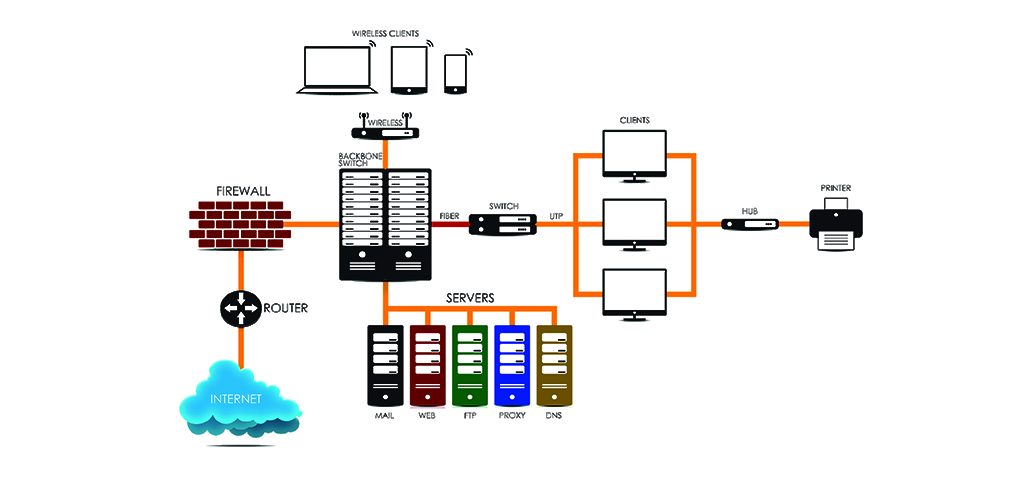
Cisco CCAr Is Retired: Where Architect-Level Design Fits Now
Cisco Certified Architect, usually shortened to CCAr, once represented the top of Cisco’s certification pyramid. It was built for people who could translate business strategy into an enterprise architecture and defend that architecture before senior technical and business reviewers. That made it fundamentally different from a routing exam, a configuration lab, or even a conventional design credential. The important 2026 fact is that CCAr is no longer an active Cisco certification. Cisco’s retired-certification record lists Cisco Certified Architect as retired on March 1, 2021. That means candidates cannot pursue CCAr…

MCSE After Retirement: How Microsoft Certifications Evolved
MCSE was one of the defining Microsoft credentials of the client-server era. For years, Microsoft Certified Systems Engineer and later Microsoft Certified Solutions Expert credentials signaled that a professional could design, deploy, and operate substantial Microsoft infrastructure. The program changed repeatedly as Windows Server, SQL Server, Exchange, SharePoint, private cloud, business applications, and Azure reshaped enterprise IT. MCSE is now historical. Microsoft retired the remaining MCSA, MCSD, and MCSE certifications and their associated exams on January 31, 2021 as it moved toward role-based credentials. That matters because older career advice…

AWS vs Azure vs Google Cloud: Architecture Trade-Offs
The old “cloud wars” framing made sense when public-cloud adoption was often discussed as a winner-takes-all race. In 2026, that framing is less useful. AWS, Microsoft Azure, and Google Cloud are all broad platforms with mature compute, storage, database, networking, analytics, AI, security, and management services. The practical question for an architecture team is not which provider wins an abstract contest. It is which platform best fits the organization’s workloads, identity model, data strategy, operating skills, commercial relationships, and regulatory constraints. A serious comparison therefore starts with architecture rather than…

Finding an IT Job: Five Practical Steps
The process of finding a technology job has changed more dramatically over the past decade than it did in the previous fifty years combined. Digital platforms, artificial intelligence screening tools, remote work normalization, and the explosion of online professional communities have fundamentally transformed every stage of the job search process from initial opportunity discovery through final offer negotiation. Candidates who approach their IT job search using strategies that worked reliably five or ten years ago consistently find themselves confused and frustrated by outcomes that do not reflect their genuine qualifications…

Five Entry Points Into IT Careers
Starting a career in information technology can feel overwhelming when you consider the sheer breadth of roles, specializations, and technical requirements that the field encompasses. From software development and cybersecurity to cloud architecture and data engineering, the options are numerous and the learning curves can appear steep to anyone approaching the industry from the outside. However, the reality is that not all IT roles demand the same level of technical depth from the outset, and choosing a smart entry point can make the difference between a frustrating start and a…

Five Microsoft Certifications for High-Value IT Career Paths in 2026
Microsoft’s certification catalog is large enough that choosing a credential by popularity alone is a poor strategy. A better approach is to choose a career path first and then select the certification that validates the work you want to perform. In 2026, five paths stand out because they represent distinct, durable job families across cloud operations, business intelligence, security operations, data engineering, and DevOps. The point of this list is not to rank the credentials against one another. They solve different professional problems. An Azure administrator should not pursue a…
Microsoft MCSA: What the Retired Certification Still Means
Microsoft MCSA was once one of the best-known mid-level certification families in enterprise IT. It gave Windows Server, SQL Server, cloud, and client-management professionals a recognizable way to prove product-specific skills at a time when Microsoft certifications were organized around technologies rather than job roles. That history still matters. What has changed is the action a learner should take today: MCSA is a retired credential, not a certification path a new candidate can still enter. Microsoft announced the retirement of the remaining MCSA, MCSD, and MCSE paths in 2020 and,…

Cisco Certifications in 2026: Current Paths Worth Considering
Cisco’s certification portfolio changed significantly in 2026. DevNet credentials moved into the Automation track, wireless returned as a dedicated professional and expert path, cybersecurity adopted the familiar CCNA and CCNP naming, and several concentration exams were refreshed or retired. The Cisco certification catalog should control current planning because the right path depends on the work you want to perform: general networking, enterprise infrastructure, network security, wireless, automation, cybersecurity operations, collaboration, service provider, data center, or expert architecture. A current associate credential aligned with your next job can be more valuable…

Your Best Career Path With EC-Council Certification
The International Council of E-Commerce Consultants, universally known as EC-Council, has established itself as one of the most influential certification bodies in the global cybersecurity education landscape since its founding in 2001. The organization emerged in direct response to the September 11 attacks, when a group of security professionals recognized the urgent need for standardized cybersecurity training and credentialing that could help organizations and governments better protect their digital infrastructure against increasingly sophisticated threats. From that origin story rooted in genuine urgency, EC-Council has grown into a certification powerhouse whose…

Cisco Security Certifications in 2026: Choose by Security Role
Cisco’s security certification landscape in 2026 is fundamentally different from 2018. The current portfolio includes an entry CCST Cybersecurity credential, CCNA Cybersecurity for security-operations fundamentals, CCNP Cybersecurity for more advanced cyber-operations work, CCNP Security for network and cloud security engineering, CCIE Security for expert implementation, and a Cisco Certificate in Ethical Hacking for offensive-security skill development. That means there is no useful single ‘best’ Cisco security certification. The correct path depends on whether your job is security operations, network security engineering, expert implementation, or offensive testing. The internal Cisco security…

Top 10 Most Difficult Tech Jobs
Difficulty in technology careers is not simply a matter of how much code you write or how many servers you manage. True difficulty emerges from the combination of cognitive demands, the consequences of failure, the breadth of knowledge required, the speed at which the field evolves, and the pressure that comes with being responsible for systems that millions of people depend on. Some technology roles are technically demanding but narrowly focused, while others require professionals to hold enormous amounts of interdisciplinary knowledge in their heads simultaneously while making decisions under…

IBM Certifications in 2026: Choose by Product and Role
IBM certification in 2026 is much broader than the product families that dominated older certification lists. IBM now maintains live certifications and credentialed learning paths across watsonx, generative AI, data and analytics, automation, security, integration, asset management, and enterprise infrastructure. A page titled “Best IBM Certifications in 2018” therefore needs more than a date change; it needs a different selection method. IBM’s own training catalogue encourages candidates to choose a path that fits their career goals, learn through courses and hands-on labs, then prepare with study guides and practice resources….

Why CISSP Certification Is So Popular?
The Certified Information Systems Security Professional credential, universally known as CISSP, has achieved a level of global recognition that very few professional certifications in any field can claim to match. Offered by ISC2, one of the world’s leading nonprofit organizations dedicated to cybersecurity education and certification, the CISSP is acknowledged by employers, governments, and security professionals across virtually every country and industry sector as a definitive marker of cybersecurity expertise. This widespread recognition did not happen overnight but is the result of decades of rigorous standard-setting, continuous curriculum development, and…

Cisco Certifications in 2026: Build a Role-Based Career Path
Cisco’s certification portfolio in 2026 is far broader than the classic CCNA-to-CCNP networking ladder. Cisco now has role paths across networking, cybersecurity, security engineering, automation, data center, wireless, collaboration, service provider, field technology, and AI infrastructure. Several exams were also renamed, replaced, or retired during 2026, so older career advice can point to certifications that no longer exist. The current Cisco certification role paths are best understood by job family. Start with the technology area you operate, then move from associate knowledge to professional specialization and expert implementation where that…

Top 10 Highest-Paying IT Certifications In 2018
The relationship between professional certification and compensation in the information technology industry is not random or arbitrary — it follows a clear and understandable logic that reflects the intersection of skill scarcity, business criticality, and market demand at any given point in time. Certifications that command the highest salary premiums are almost always those that validate expertise in technologies where the supply of qualified professionals falls significantly short of organizational demand, where the cost of incompetence or misconfiguration is extremely high, or where the strategic importance of the relevant technology…
- Career
- Certifications
- Amazon
- Anthropic
- Certification Guidance
- Cisco
- CompTIA
- Databricks
- EC-Council
- Fortinet
- Google Cloud
- ISACA
- ISC2
- ITIL & Service Management
- Microsoft
- Palo Alto Networks
- Privacy, Risk & Compliance
- Professional Certifications
- Project Management
- Scrum & Agile
- Security Certifications
- ServiceNow
- Six Sigma & Quality
- TOGAF & Enterprise Architecture
- VMware & Broadcom
- Technology
- Test Prep
- Uncategorized
